
LCF
2026
Fiberglass and Steel
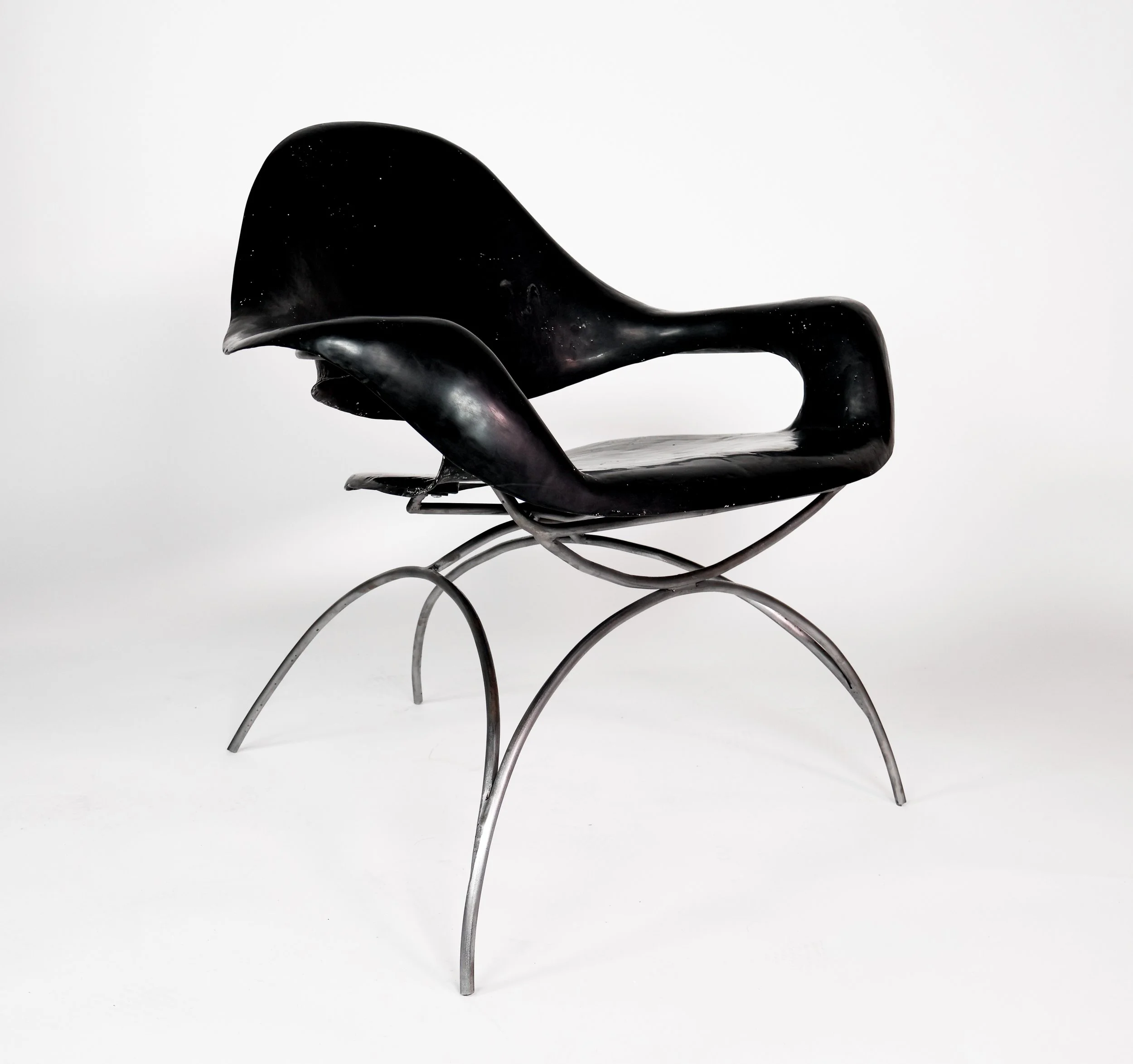
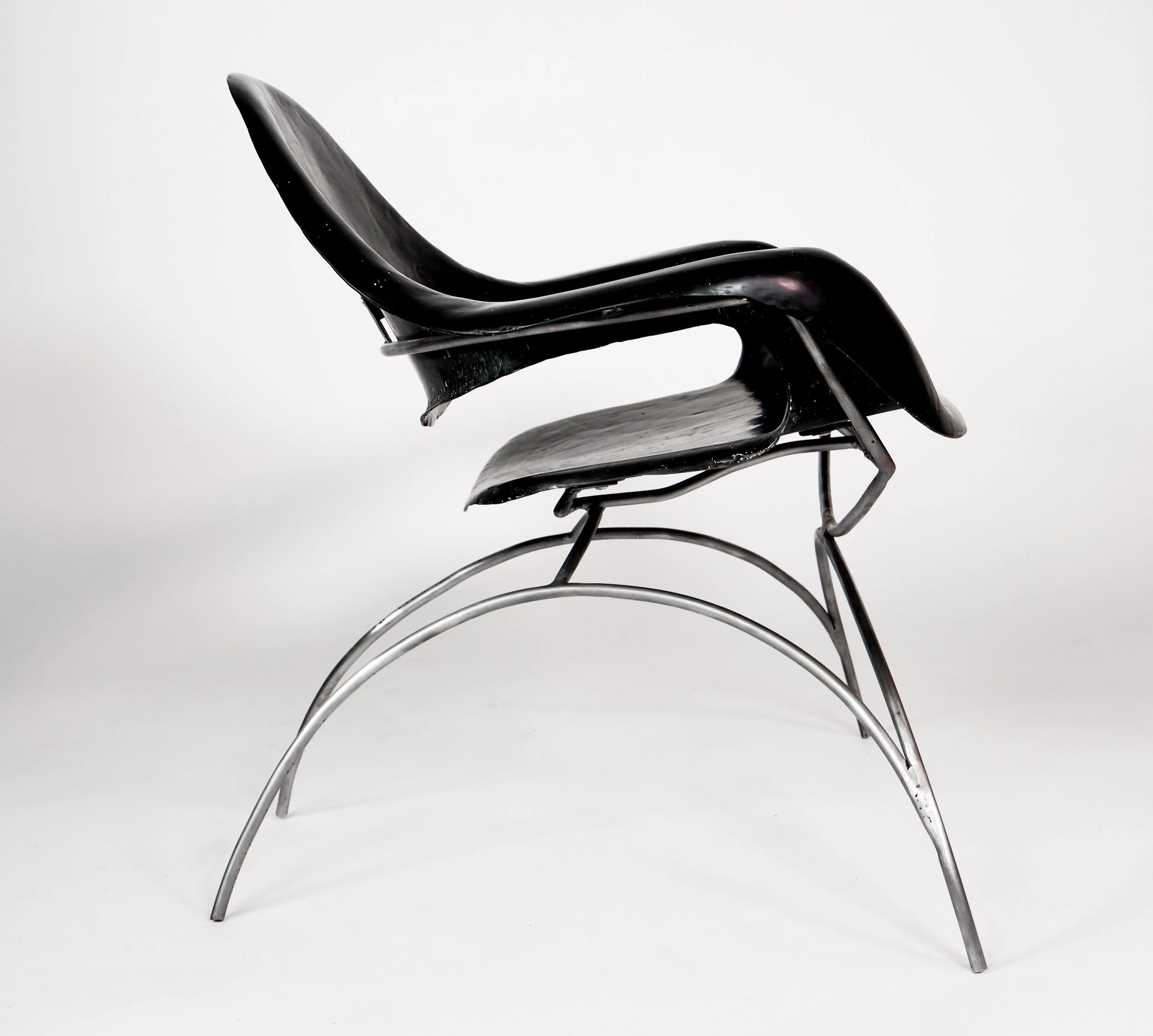
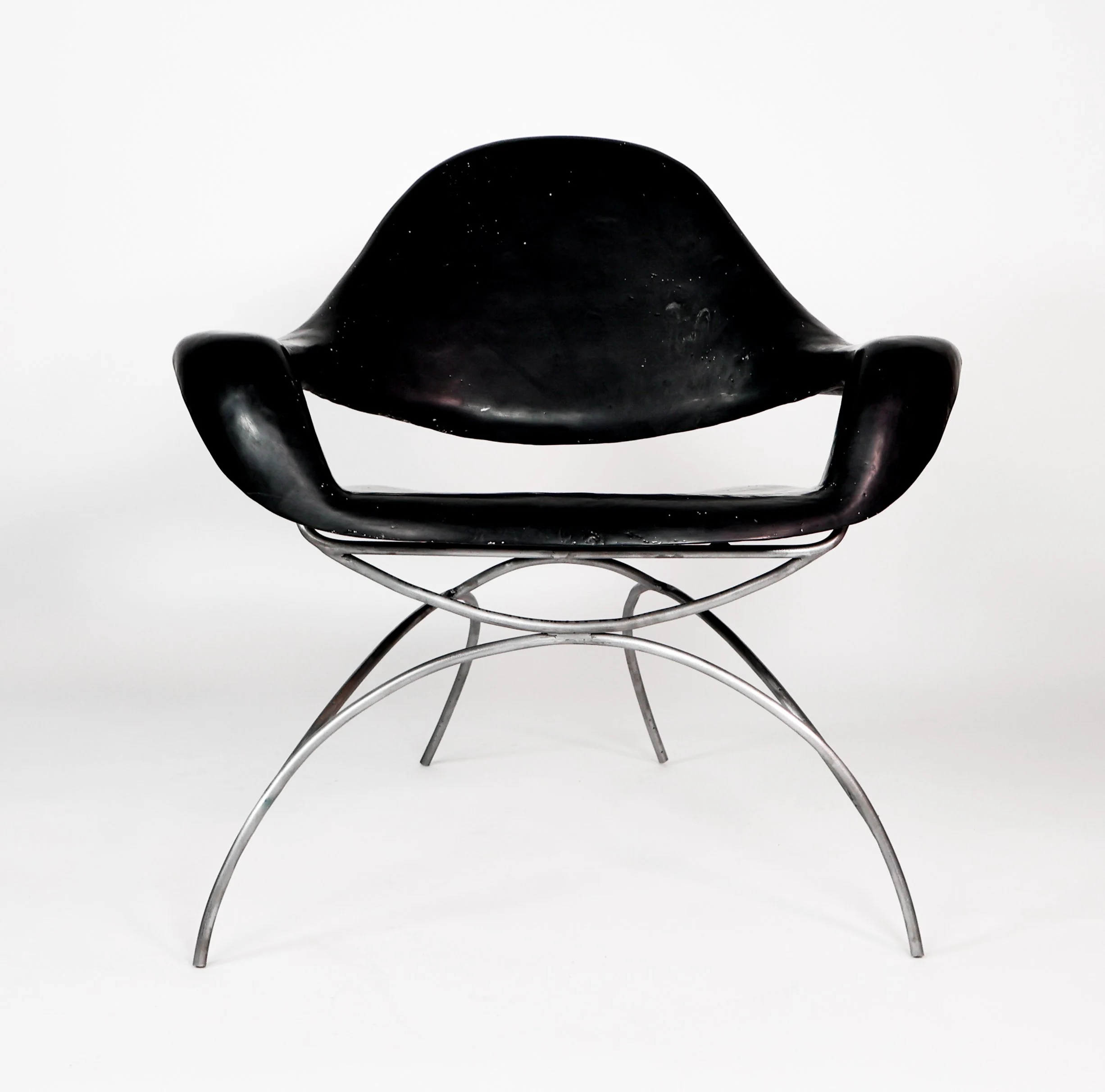
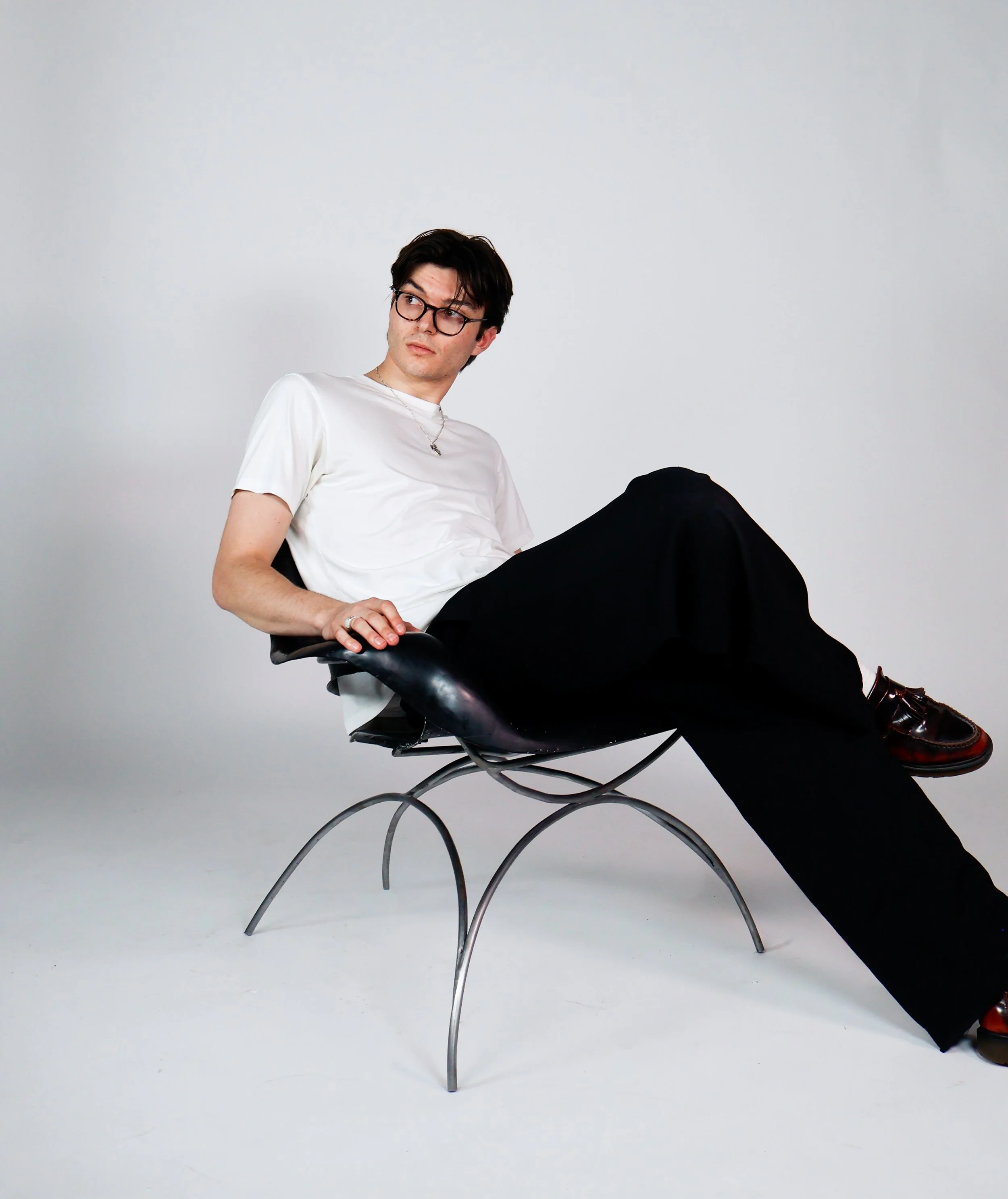
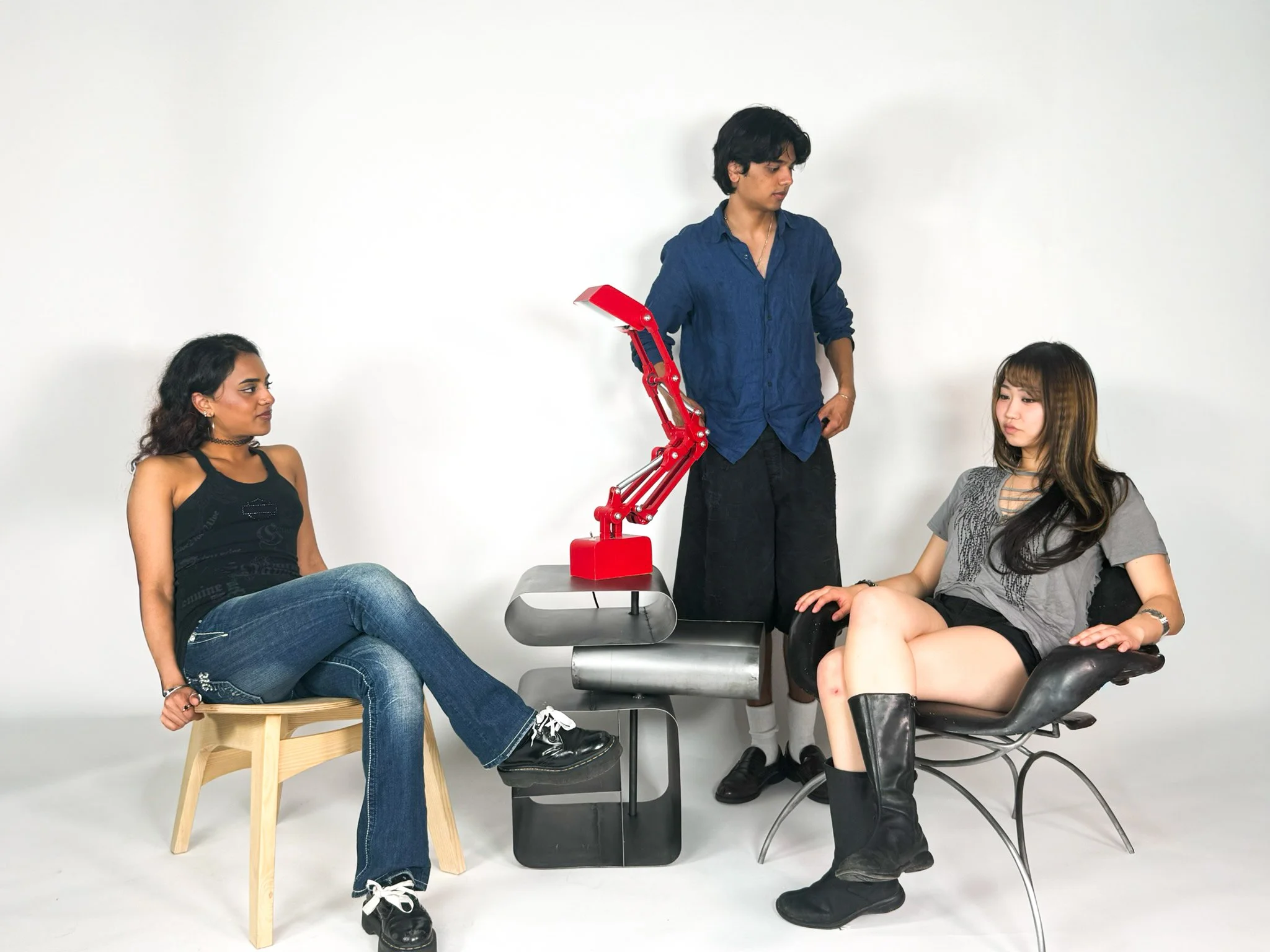
My project was to design a minimalist lounge chair for reading and reflection. I did this because I want to combine the sculptural and structural elements of design to reconcile the disconnect between contemporary, international, and mid-century modern design. This matters because there is a lack of a unique yet simple design that is excellent, rather than relying on a wow factor.
Process and Making
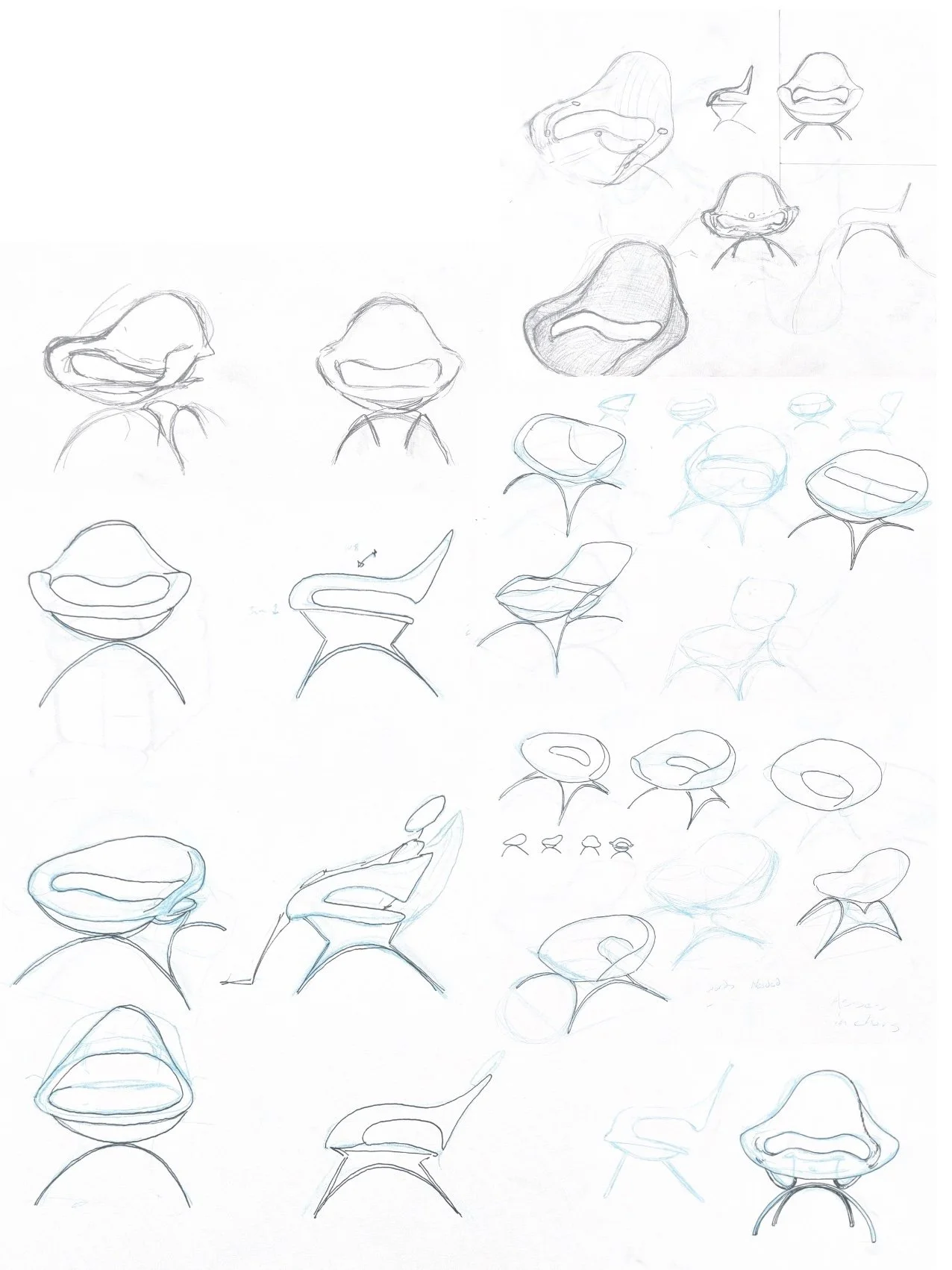
1. Ideative Sketches
Rapid Sketches of multiple forms
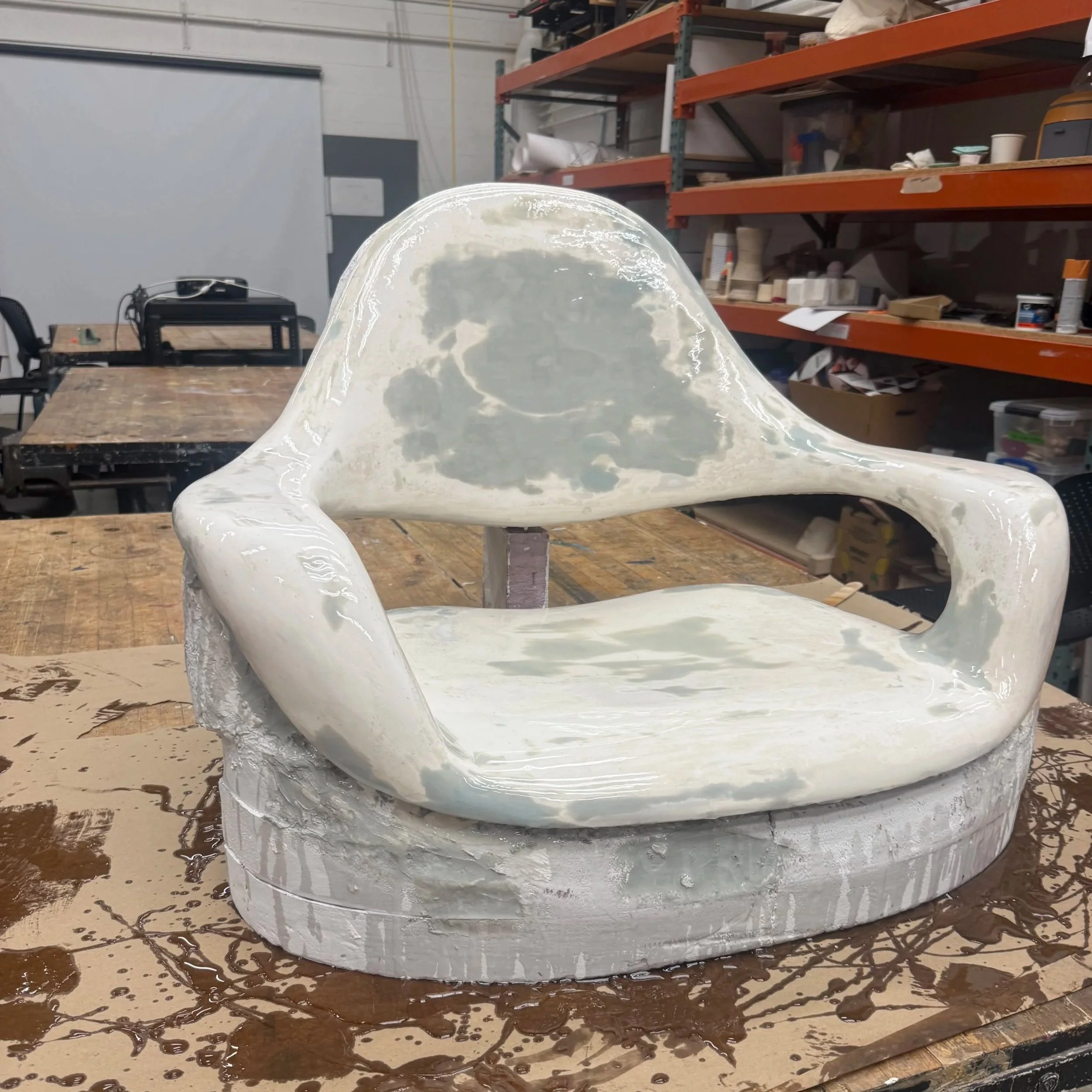
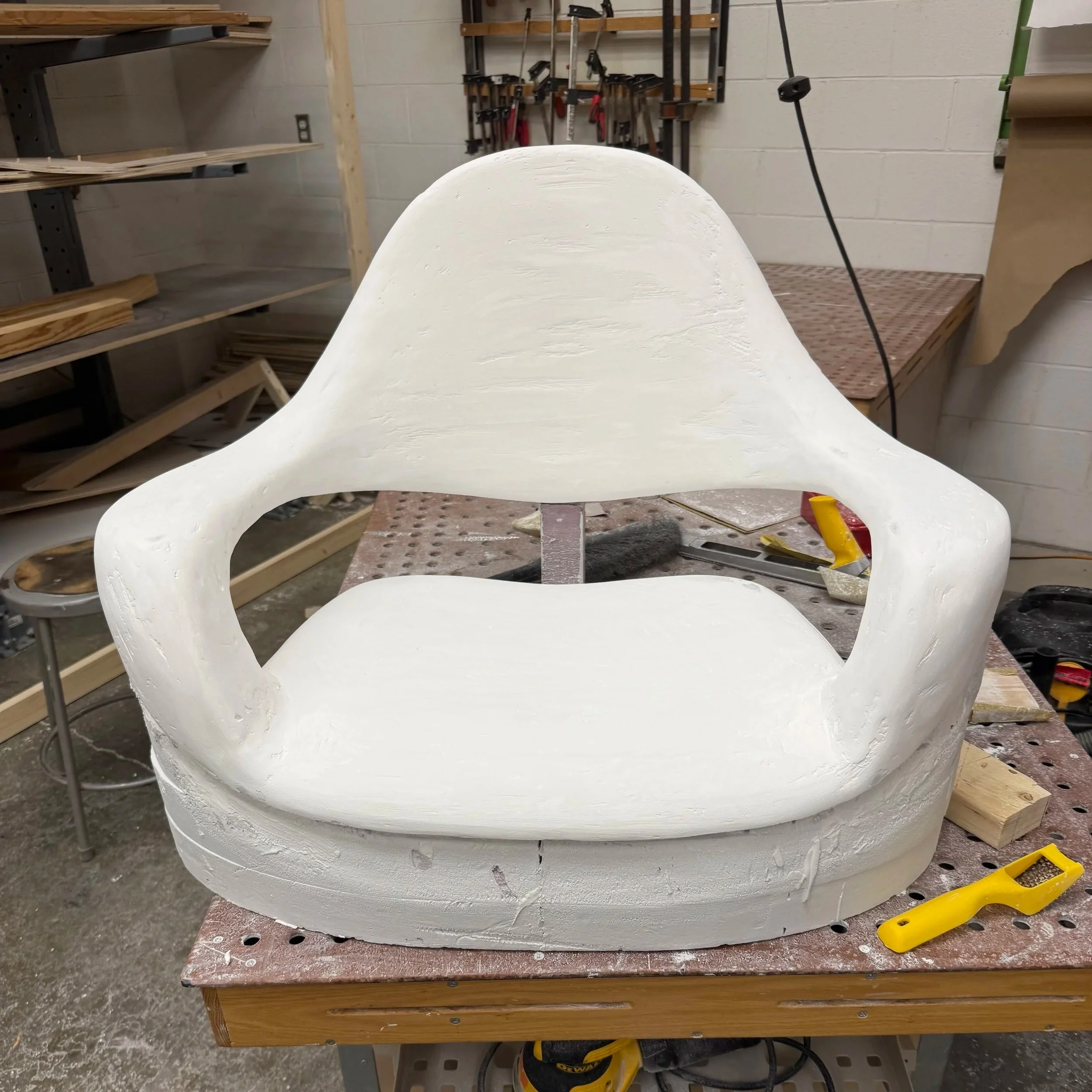
4. Finished Mold
Patched in Bondo and covered in a resin coating, sanded to 600 grit with mold release applied.
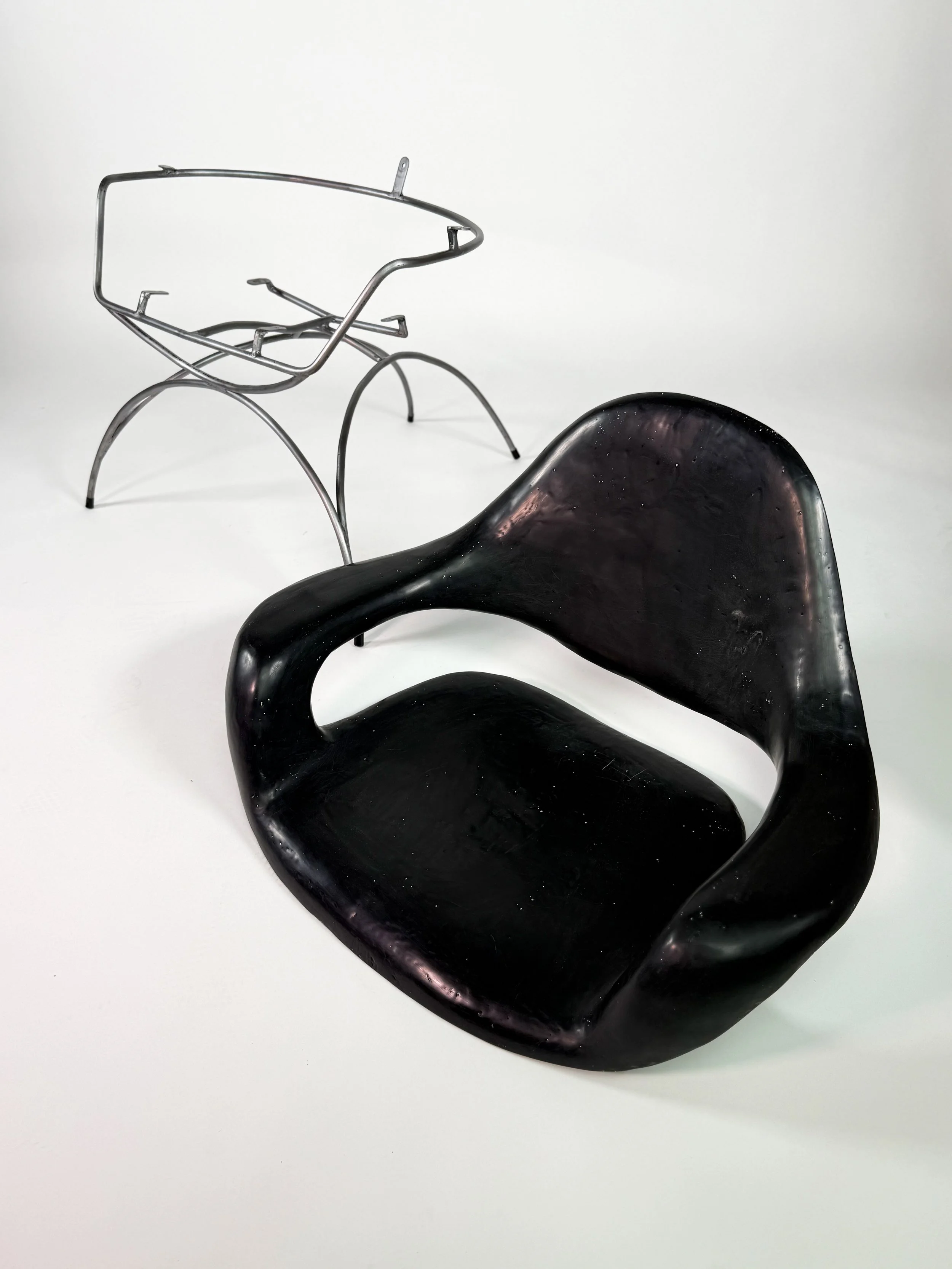
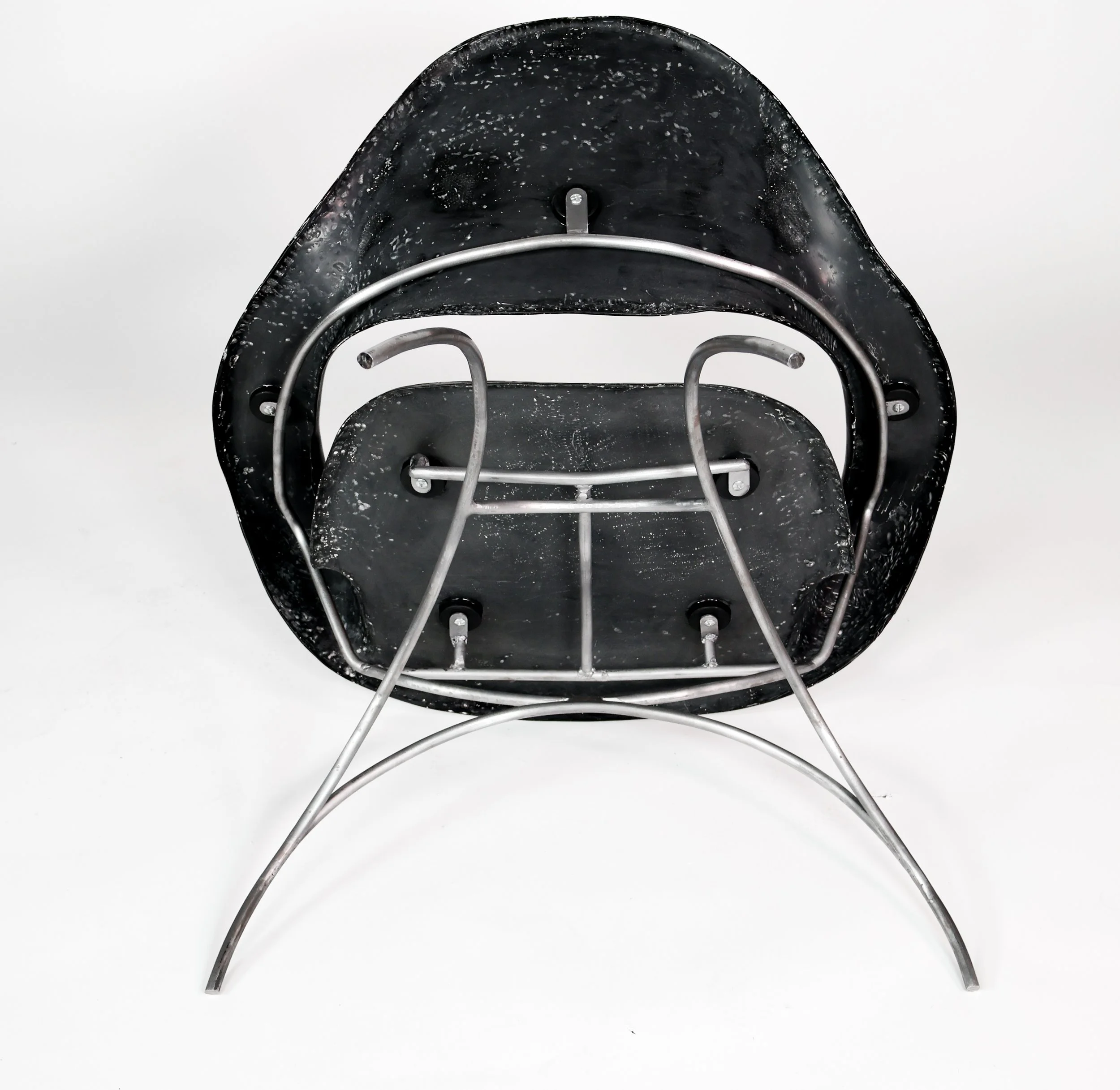
7. Final Assembly
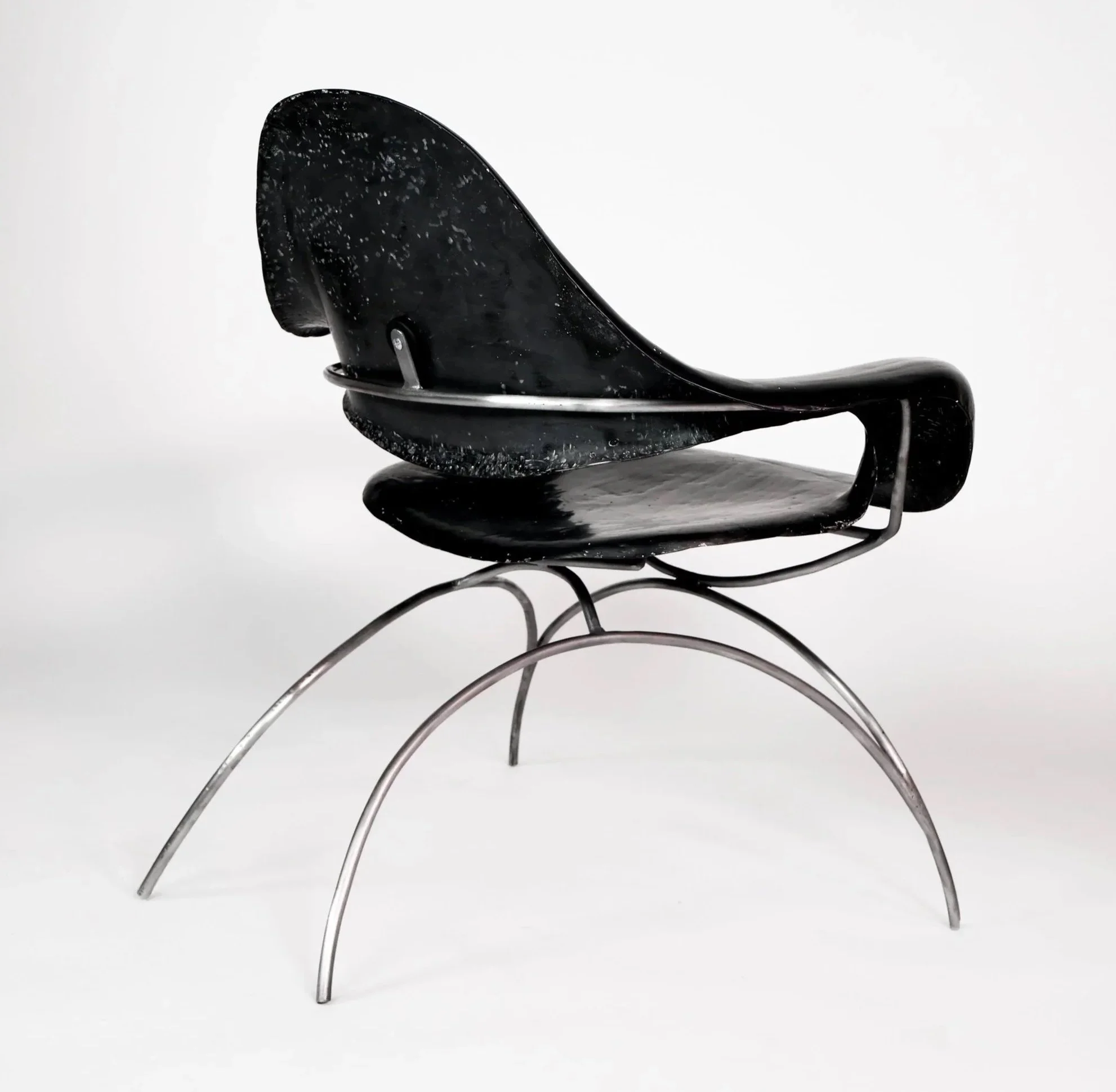
Comes apart into the shell and frame installed on rubber shock mounts.
Design Goals
The primary goals of this design were simplicity and functionality, but with every angle chair being a curve. I wanted to reconcile the differences I see between contemporary, mid-century, and international design languages, all of which we understand as being a staple of our world, but don’t move us forward. Taking from contemporary furniture designs' emphasis on sculptural form, midcentury modern material understanding, and international designs’ structural understanding, I sought to create a chair that felt distinctly of the moment we live in, but still calling upon collective design history.
In its most basic form, “How might we create a lounge chair from a fiberglass shell and steel rod to reconcile the differences in contemporary design languages for daily life and relaxation?”
Precedence
This project was informed by the work of Poul Kjaerholm, Ray and Charles Eames, Pierre Paulin, Eero Saarinen, and Charlotte Perriand. Drawing from the material understanding of Kjaerholm that harsh industrial materials can be beautiful, informed my choice of Fiberglass and steel. Using Eames and Saarinen as a reference for how to go about lamination and the kinds of forms its processes allow you to create. And Perriand and Paulin’s emphasis on the blend between form, sculpture, and function
Research and Material Application
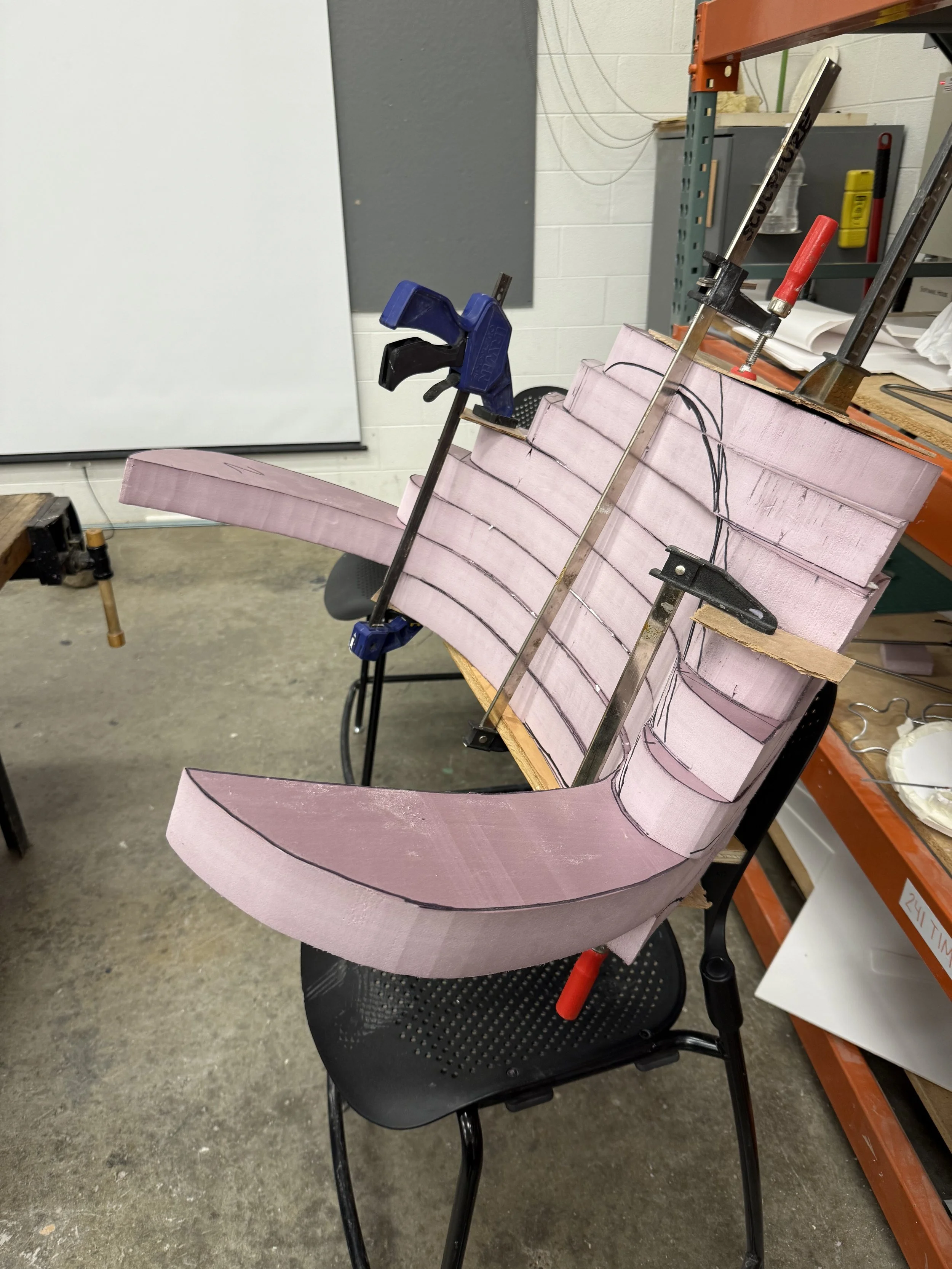
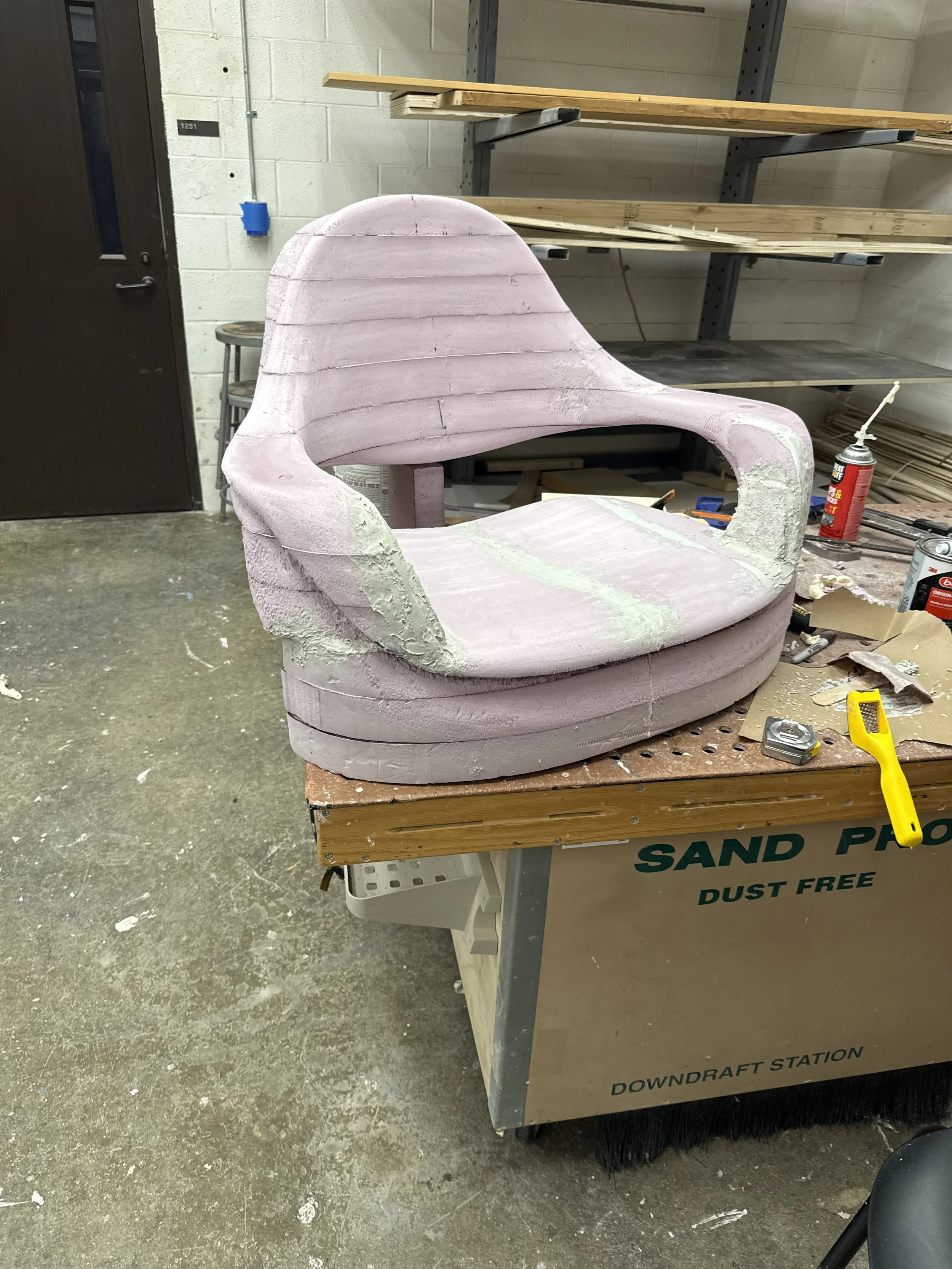
Research for fiberglass lamination made up the majority of the case study. I decided to create a reverse female mold by hand-carving the shape. In future iterations, I would streamline this process by using a CNC Machine to mill the material into smaller, more precise segments. Hand-carving the mold had its own benefits, however, despite its lack of precision. I was able to continuously test and adjust the ergonomics of the chair with a user group of ten people.
The fiberglass shell was created through using a one-part waste mold constructed by hand with a core of XPS Foam, Plaster, and then coated in resin. Fiberglass is then applied through resin lamination and dyed black with UVO dye.
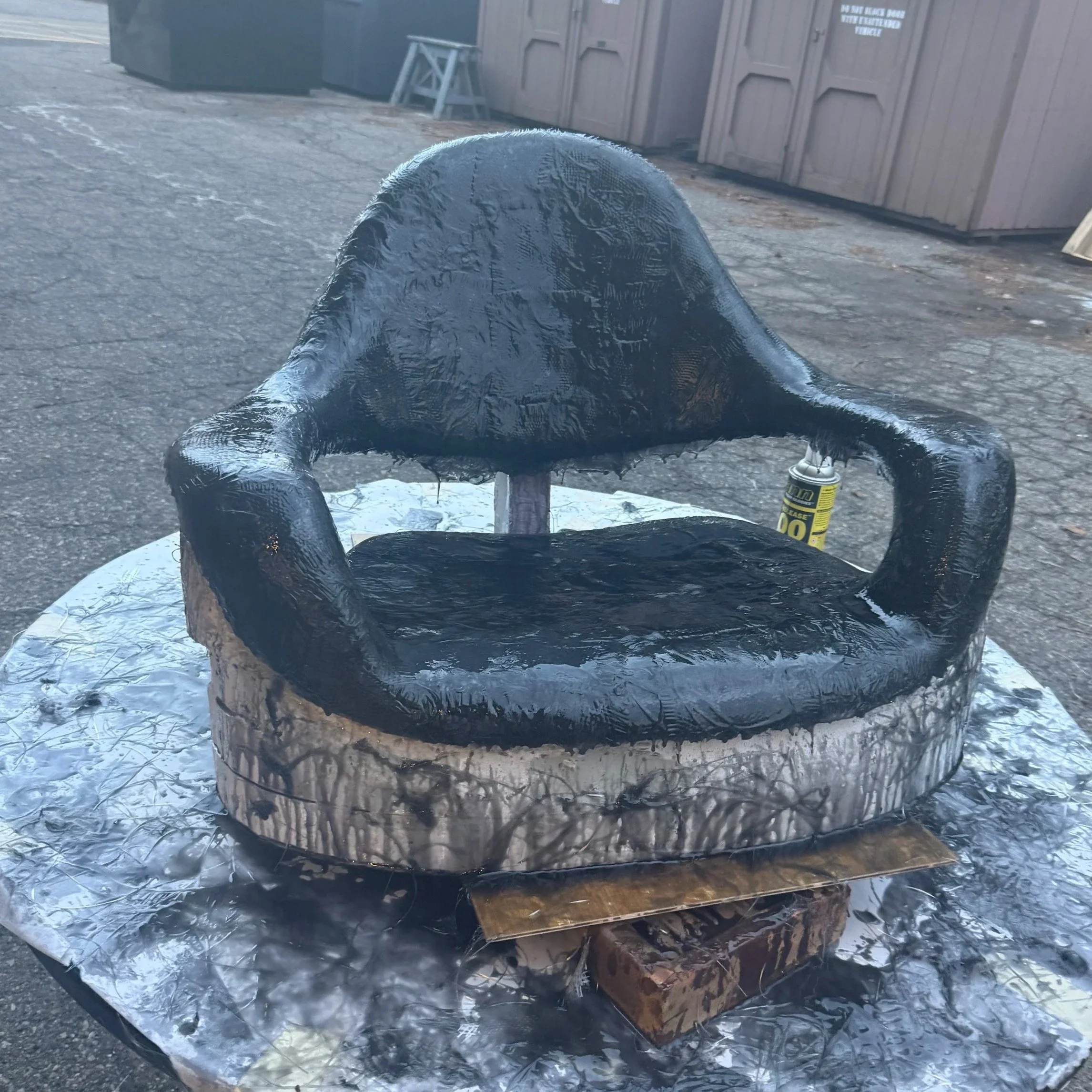
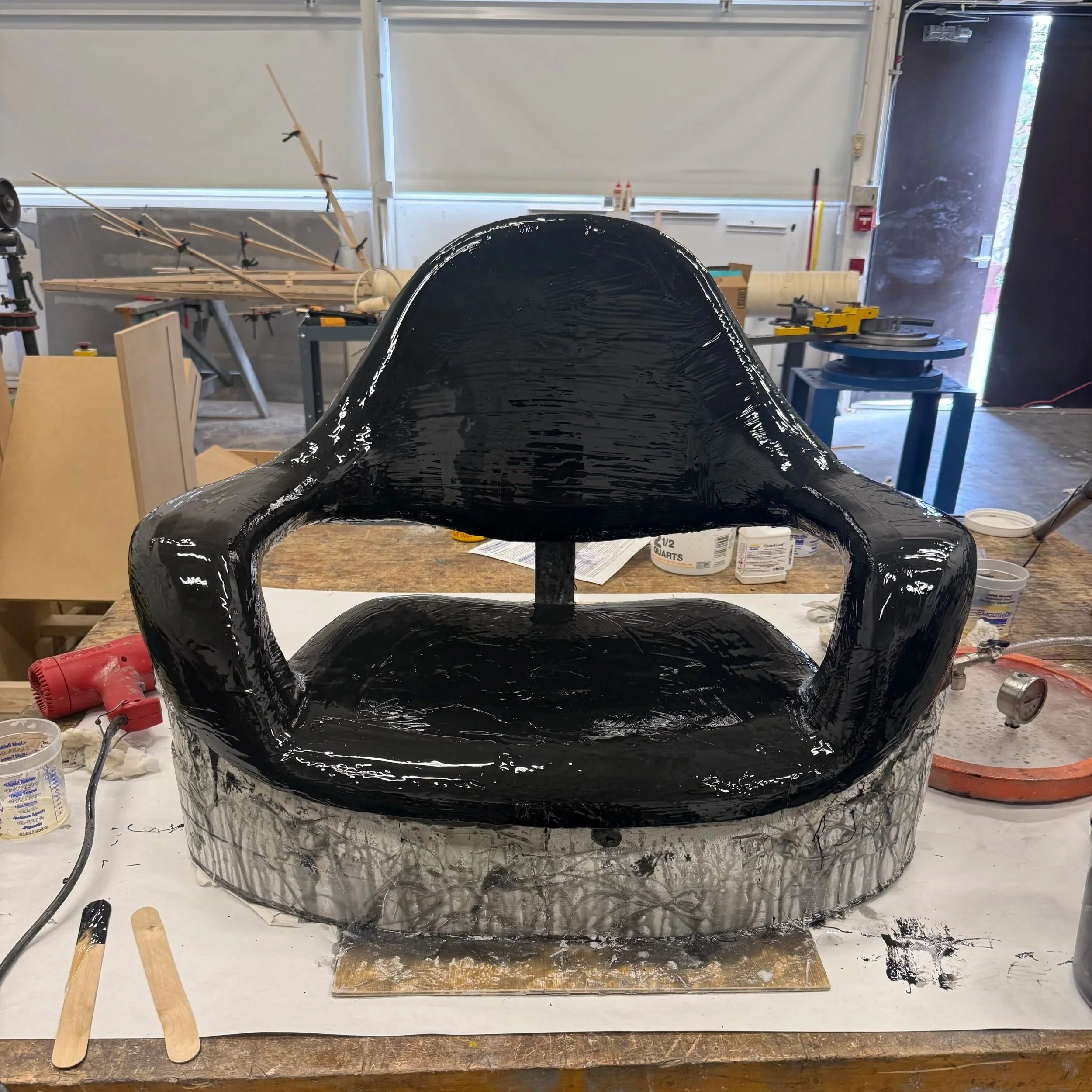
The first step of lamination was applying a resin gel coat to the mold and then laminating using fiberglass roving weave to the tool for nine layers to build up thickness. I then sanded the part down before applying the final gel coat to the surface. This created a somewhat even finish at the top of the shell but still presented some irregularities. I had to work with a second person on lamination, Adelina Akhmetshina, to make sure resin could be continuously mixed before the resin pot life expired, and lamination could continue without excessive heat from the endothermic reaction, causing delamination.
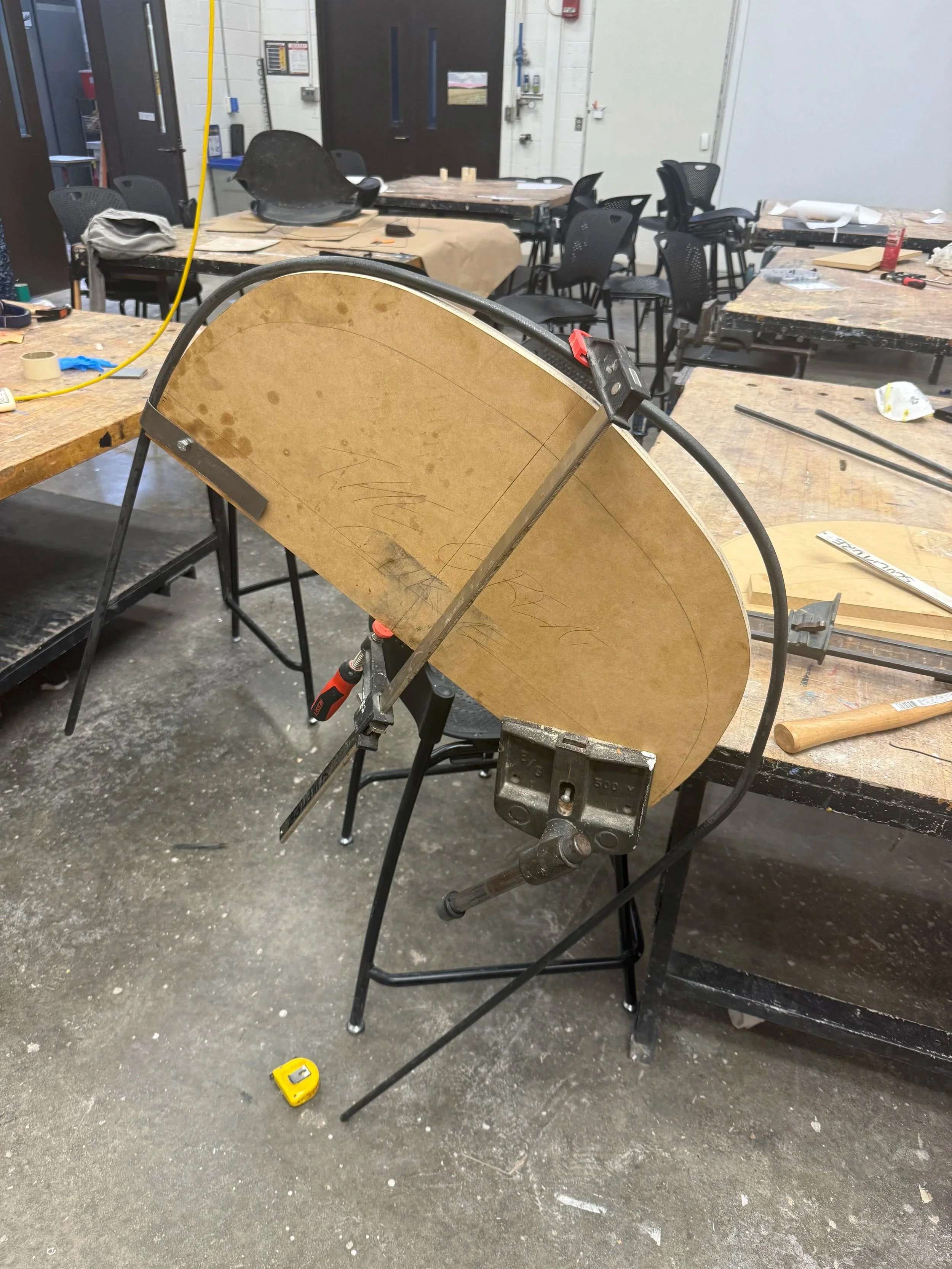
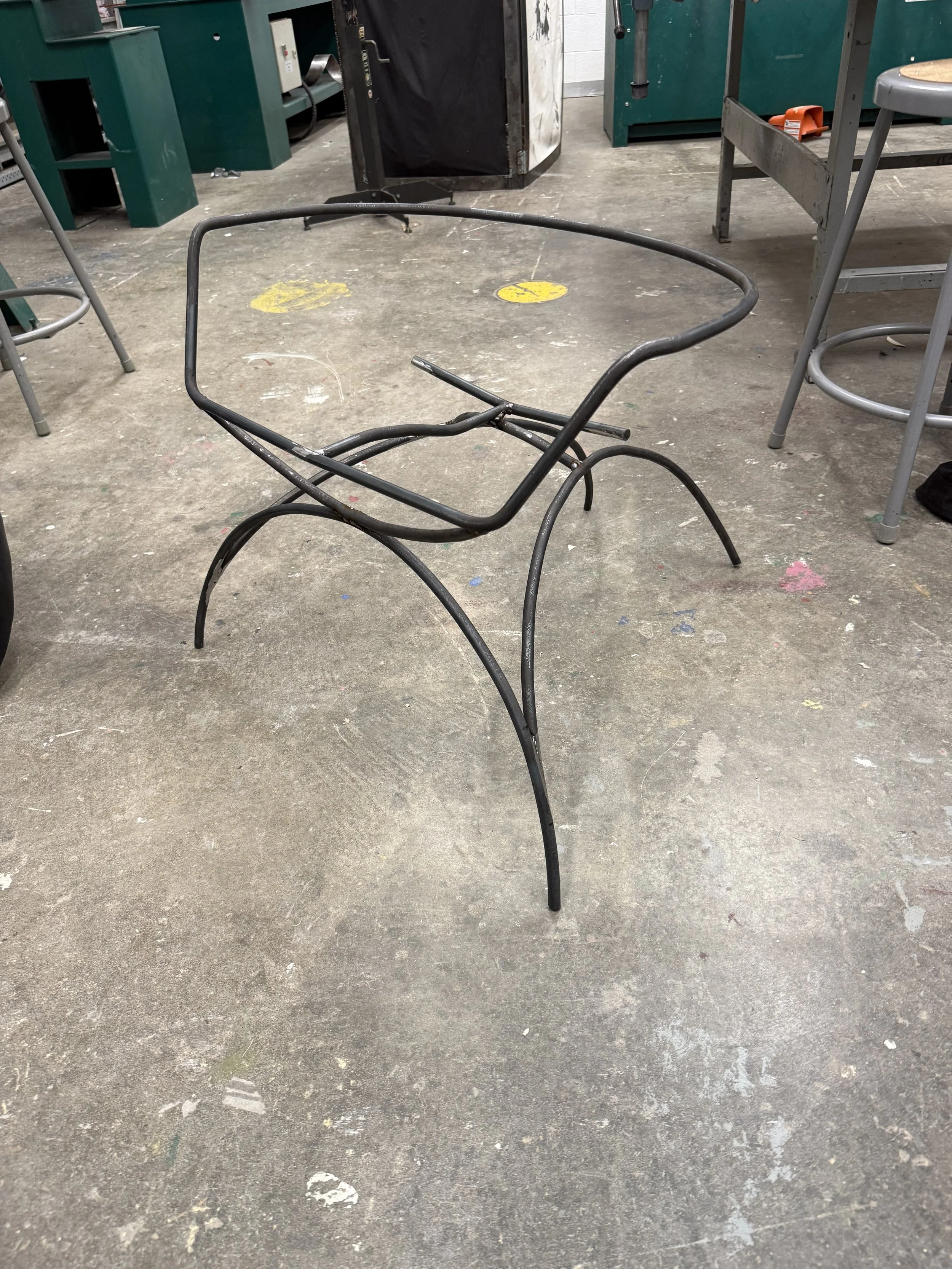
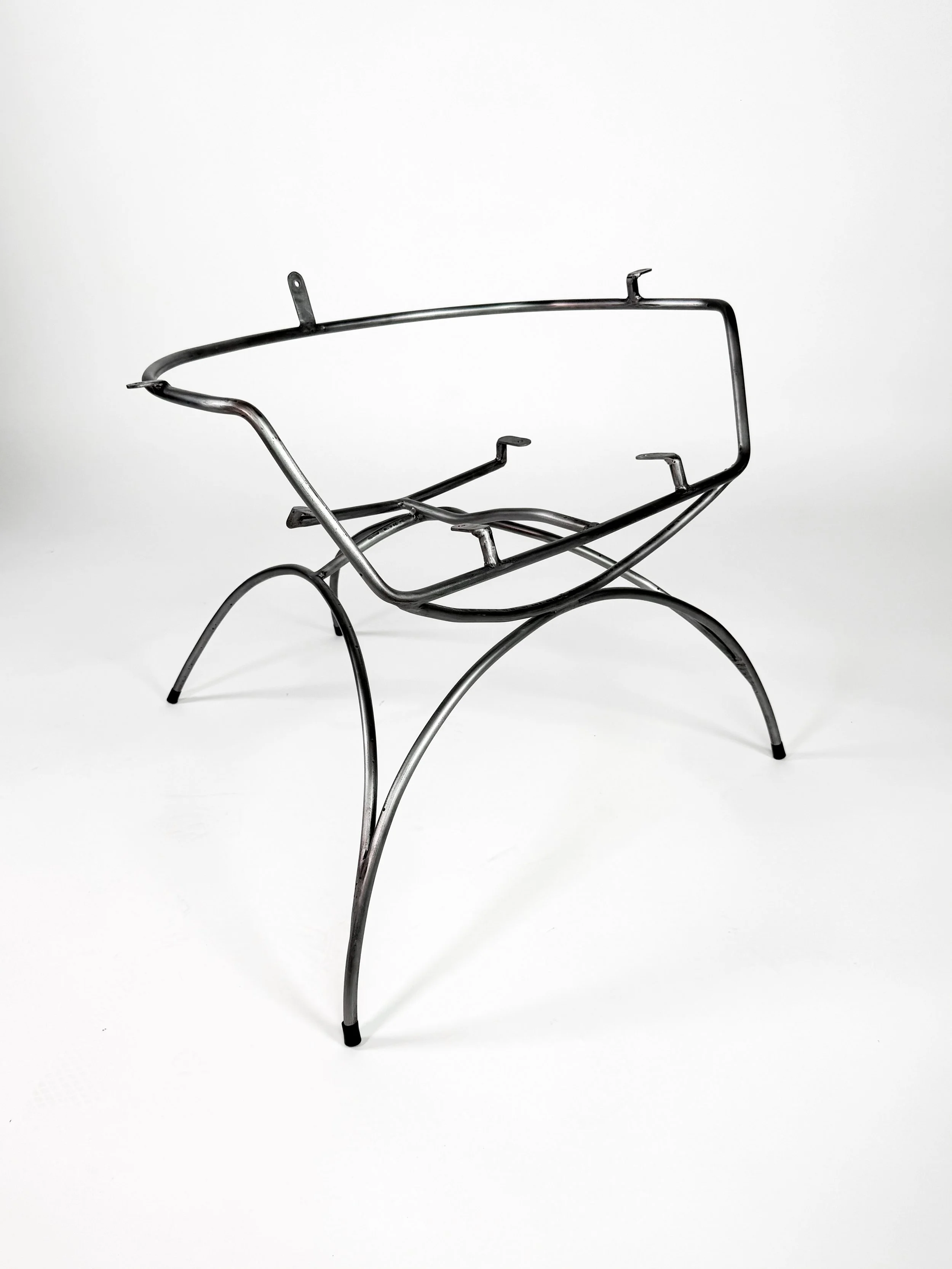
The frame of the chair is constructed from half inch steel rod, curves I made to model the exact dimensions needed for the chair to support weight, while also following the perimeters I had set out in my brief to have the design consist of curves and sculptural form.
The project timeline was fifteen weeks, with a dedicated seven weeks for making, and was completed on April 21st, 2026.
Value Proposition
A fiberglass and steel lounge chair that unites sculptural form with industrial precision, leveraging the strength-to-weight advantages of advanced materials to deliver a lightweight, highly durable seating solution that meets the aesthetic and performance standards of contemporary furniture design.
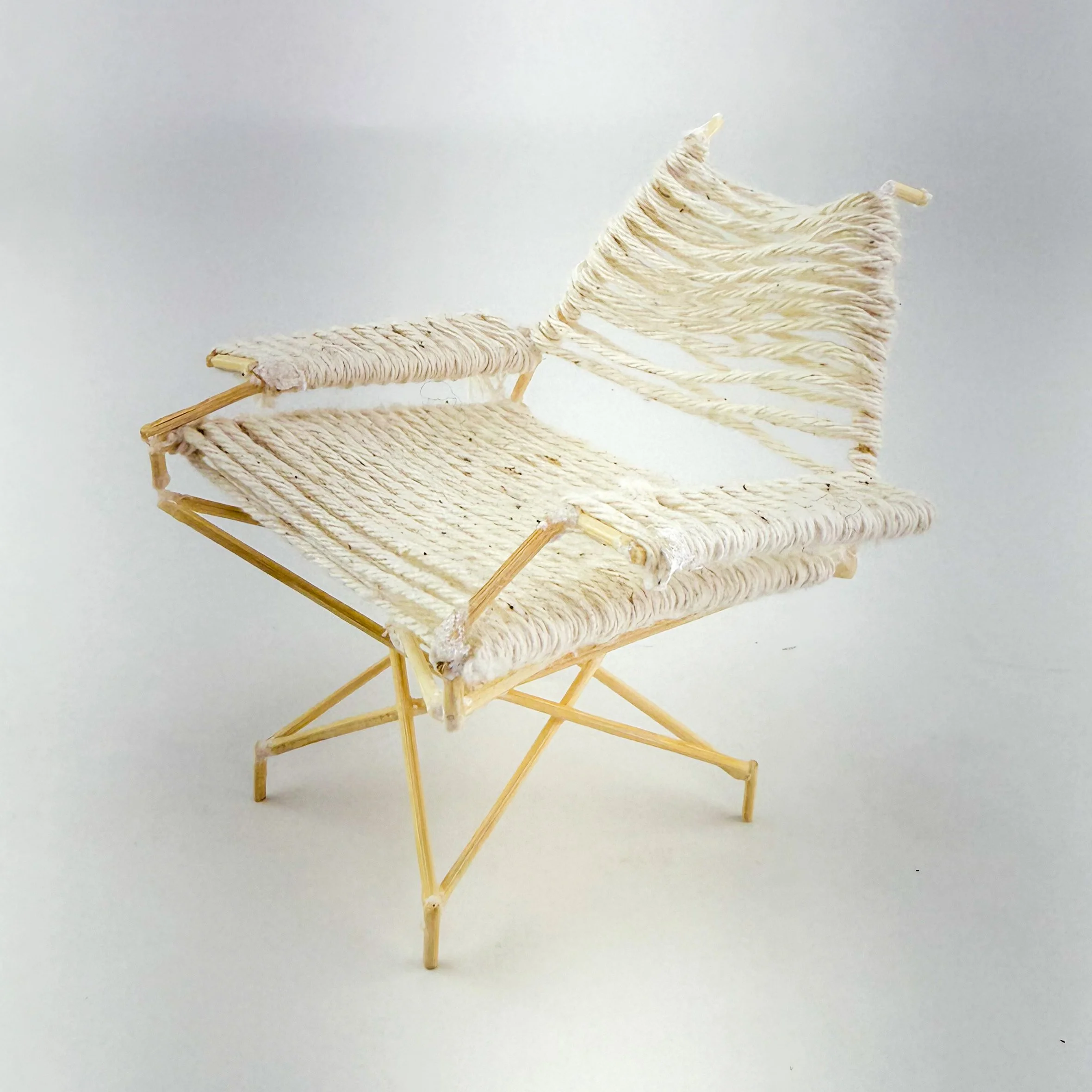
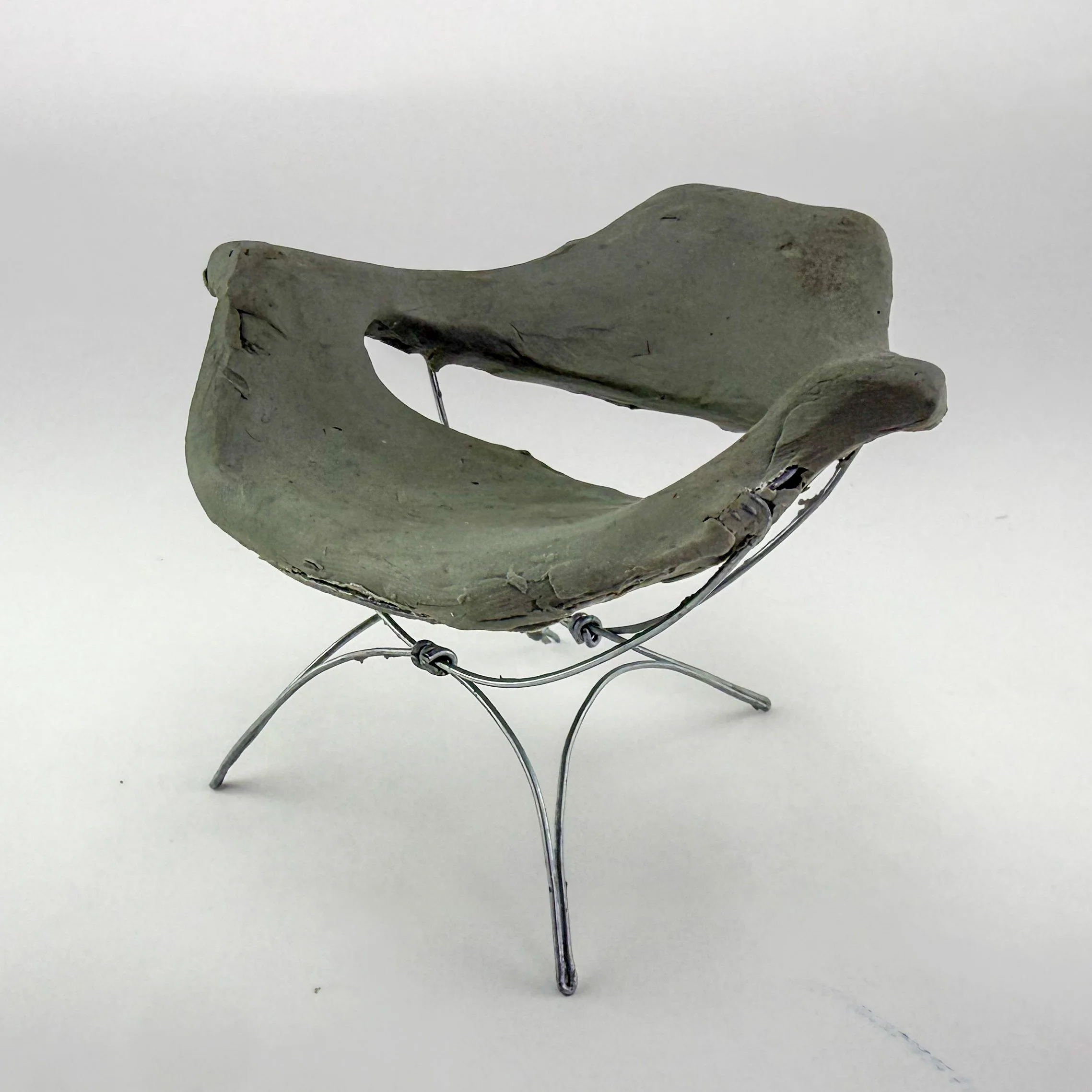
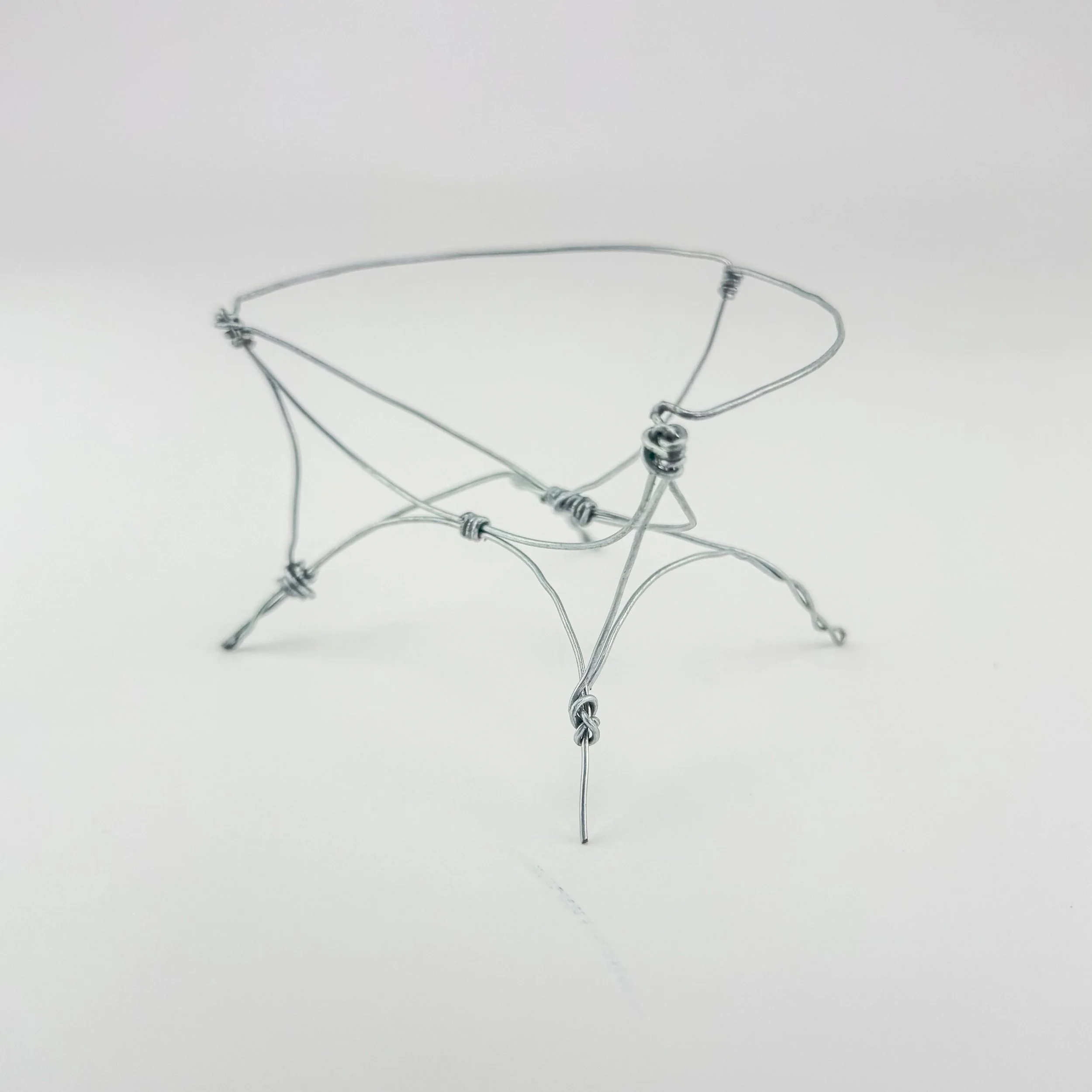
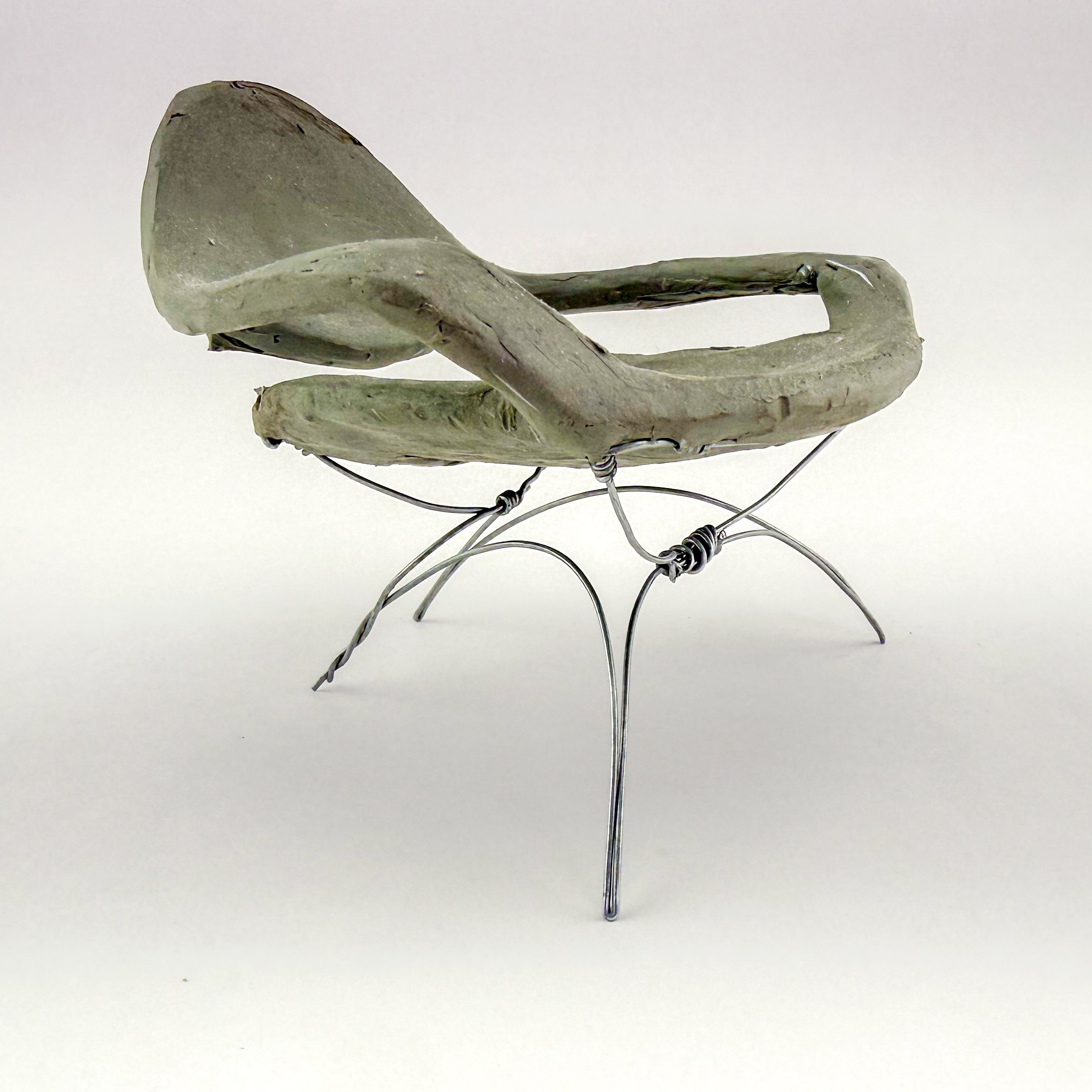
2. Models
Models made before settling on the final idea (wire, clay, string, wood)
5. Lamination
Took place in two sessions: between gel coat, first round of lamination, and second round to add further strength, and then final gel coat.
3. Form/Mold Development
Shaping the form of the Shell in XPS foam and covering in Plaster
6. Metalworking
Bending steel rod into the correct Curves and then welding the frame together.
Extra Documentation
Failures and Changes
This is iteration one; it was my first time working with fiberglass, and the second project involving welding. The mold I constructed was very rudimentary, consisting of one part that was all hand-shaped. This would be the first change; I would CNC the mold from XPS foam or another material before coating it in plaster for more accurate geometry, and also to prevent the possibility of breaking the mold to remove the part. I would also add flanged edges to the mold so it could have more of a clean edge and prevent resin from pooling. Finally, the method of fiberglassing I would change as well, switching to spray-up fiberglass, but I didn’t have the resources to do that at the time of making. Spray-up fiberglass would remove the issue of bubbling and irregularity throughout the surface as well.